
Medicare and Preexisting Conditions: What Is Covered

Yes, Medicare covers care for conditions you had before you enrolled. Diabetes, heart disease, cancer, arthritis and other long-term conditions are not a reason to be turned away from Original Medicare or to be charged more for it. The one place a preexisting condition can matter is Medigap (Medicare Supplement insurance), and there it comes down to timing. Buy at the right moment and your health history is not part of the decision. At Almond Insurance, we help people in Northern Illinois and Southern Wisconsin line up that timing before they sign anything.
TL;DR
- Original Medicare (Parts A and B) covers medically necessary care whether or not the condition existed before your coverage began.
- Medicare Advantage plans must cover everything Original Medicare covers, and Part D drug plans must cover a wide range of prescriptions.
- Medigap is the exception: outside certain protected windows, a company can in many cases review your health history, and in some cases impose a waiting period of up to six months.
- Your best protection is your one-time six-month Medigap Open Enrollment Period, which starts the first month you are 65 or older and enrolled in Part B.
- Prior creditable coverage, with no gap longer than 63 days, can shorten or remove a Medigap waiting period.
Table of Contents
- What “preexisting condition” means with Medicare
- Original Medicare: Part A and Part B
- Medicare Advantage and Part D
- Medigap: where timing matters
- A worked example
- Choosing a path when you have a health condition
- Late enrollment can cost more than the condition ever would
- How Almond Insurance helps
- FAQ
- Sources
What “preexisting condition” means with Medicare
A preexisting condition is any health problem you had, or were treated for, before a new insurance policy started. Before 2014, many private health plans could refuse people with these conditions or charge them more. Medicare never worked that way for its core coverage.
Original Medicare coverage is built on federal and state laws and on national and local coverage decisions, as Medicare.gov explains. Nothing in that structure asks about your medical history. What decides whether a service is paid is whether Medicare covers that service, not when your condition began.
Original Medicare: Part A and Part B
Original Medicare covers things like inpatient hospital care, doctors’ services and tests, and preventive services, according to Medicare.gov. Part B in particular helps cover doctor and other provider services, outpatient care, home health care, durable medical equipment and many preventive services, as the Medicare & You 2027 handbook describes.
So if you have had type 2 diabetes for twenty years, Part B still helps cover the doctor visits and covered tests that manage it. If you had a heart attack before enrolling, the cardiologist visits that follow are treated like anyone else’s.
Two cautions keep expectations realistic:
- Covered does not mean free. You still owe the premiums, deductibles and coinsurance that apply to everyone with Original Medicare.
- Coverage depends on the service. A service Medicare does not cover is not covered for anyone, with or without a preexisting condition.
Medicare Advantage and Part D
People generally choose between Original Medicare and Medicare Advantage for their health coverage, according to Medicare.gov. Medicare Advantage plans must cover all the services Original Medicare covers and may add extra benefits, per Medicare.gov. Your condition is covered the same way. What changes from plan to plan is how you get the care: which doctors are in the network, what the copays are and whether you need referrals.
For people who already have a condition, the network is often the real question. If your cardiologist or oncologist is not in a plan’s network, your costs can change a lot. Our guides on Medicare provider networks and out-of-network Medicare coverage walk through what to check. You can also read how Medicare Advantage and Medicare Supplement differ before you pick a path.
Prescription drugs
People with Original Medicare can join a separate Medicare drug plan, called Part D, as the Medicare & You 2027 handbook notes. Plans with drug coverage must cover a wide range of prescriptions used by people with Medicare, but each plan has its own list of covered drugs, so Medicare.gov advises checking your plan for drug-specific details.
If you take medicine for a long-term condition, that list matters more than the premium. Look up each drug, its tier and any rules such as prior authorization. The same habit applies to newer, higher-cost prescriptions: a breakdown of how insurance plans handle weight loss medications shows why the specific drug, not the general plan type, decides coverage. Our explainer on Part D costs and formularies covers how formularies work.
Medigap: where timing matters
Medigap is supplemental coverage that can help pay some costs Original Medicare does not cover, such as the cost sharing, as Medicare.gov describes. It works only with Original Medicare. Medigap cannot be used with Medicare Advantage.
This is the one part of Medicare where a company may look at your health history, depending on when you apply. There are two situations.
Inside your Medigap Open Enrollment Period
The Medigap Open Enrollment Period is a one-time, six-month window that begins the first month you are both at least 65 and enrolled in Part B, according to Medicare.gov. During it, insurers cannot refuse to sell you any Medigap policy they offer, medically underwrite you, deny coverage because of preexisting health problems or charge you more because of them.
Medically underwriting means reviewing your health history to decide whether to accept you and at what price. Inside this window, that review is off the table.
Outside that window
Federal law generally allows Medigap insurers to medically underwrite outside guaranteed-issue periods. That can mean a denial or a higher premium for someone with a preexisting condition, according to KFF’s October 2026 analysis. Federal protections include the initial six-month period and certain qualifying events, and state protections can be broader. Illinois and Wisconsin each have their own rules, which is why local guidance helps.
The six-month waiting period
Even when a company does accept you, it may add a waiting period for a preexisting condition. CMS says an insurer may exclude Medigap payment for a condition treated or diagnosed in the six months before the policy begins, for up to six months in some cases, as the Choosing a Medigap Policy guide explains.
Two things reduce or remove it:
- Prior creditable coverage. At least six months of continuous creditable coverage before the Medigap policy can eliminate the waiting period. The prior coverage generally must not have a gap longer than 63 days to count.
- Guaranteed-issue rights. If you buy under a guaranteed-issue right, the policy must cover preexisting conditions without a waiting period.
Creditable coverage here means health coverage that counts toward the rule, such as an employer plan you had before. Your plan administrator or the insurer can tell you whether yours counts.
What a waiting period does and does not mean
A Medigap waiting period does not leave you without care. Original Medicare may still cover the condition during that time. What you remain responsible for is the Medicare cost sharing that Medigap would otherwise pay, per the CMS guide. The waiting period affects who pays the deductible and coinsurance for that condition, not whether the condition is treated.
A worked example
Say Maria turns 65 in April and has had asthma and high blood pressure for years. She is retiring, and her employer plan ends in March.
- She enrolls in Part B starting April, so her six-month Medigap Open Enrollment Period runs from April through September.
- If she picks a Medigap policy in that window, the insurer cannot decline her or raise her price because of her asthma or blood pressure.
- If she waits until the following spring, the insurer may be allowed to review her health history, depending on her state’s rules and whether any guaranteed-issue right applies.
The lesson: the six-month window is worth marking on a calendar the day you sign up for Part B. Our Medicare enrollment timeline lays out where each window falls.
Choosing a path when you have a health condition
Your condition does not decide which kind of Medicare is allowed. It helps decide which kind fits. Ask yourself:
| Question | Why it matters |
|---|---|
| Which doctors and hospitals treat my condition? | Network rules can change your costs under Medicare Advantage. |
| Which drugs do I take, and at what dose? | Each Part D plan has its own drug list and tiers. |
| How often do I need care? | More visits make deductibles and coinsurance a bigger part of your yearly cost. |
| Am I inside my Medigap Open Enrollment Period? | It is the one time the health review is off the table. |
| Do I have prior coverage with no gap over 63 days? | It can shorten or remove a Medigap waiting period. |
If you want to compare the options side by side, our Medicare Supplement and Medigap guidance and Medicare Advantage guidance pages describe each category.
Late enrollment can cost more than the condition ever would
For most people, the costly mistake is missing a deadline, not having a diagnosis. For example, the Part D late enrollment penalty is 1% of the national base beneficiary premium for each full month you could have joined drug coverage but did not. That base premium is $38.99 in 2026 and $41.33 in 2027. The penalty is added to your Part D premium. Medicare publishes a new base premium each year, so check the page for the current figure. If you are unsure whether you owe it, our Part D penalty calculator can help you estimate.
How Almond Insurance helps
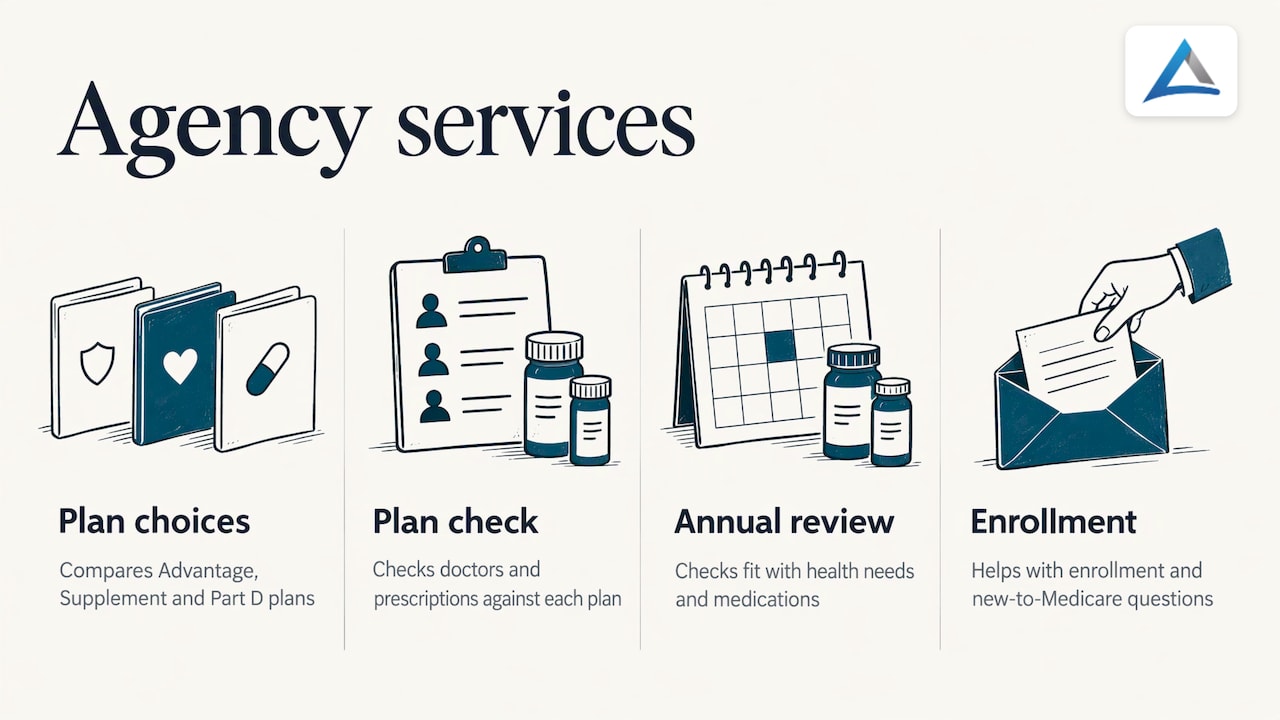
We are a Medicare insurance agency in Rockford, Illinois, serving Northern Illinois and Southern Wisconsin. We compare Medicare Advantage, Medicare Supplement and Part D plans, and we help with new-to-Medicare questions, annual coverage reviews and enrollment. Consumers do not pay us directly for this advice. We are paid by the insurance carrier when a client enrolls in a plan.
For a reader with a health condition, that means someone can check your doctors and prescriptions against each plan and tell you where your Medigap window falls, in plain language rather than jargon. Start with our new-to-Medicare guidance, or see all our services.

If you are already enrolled, our annual coverage review looks at whether your plan still fits your health needs and your medications. You can also go straight to enrollment next steps.
FAQ
Can you be denied Medicare because of a preexisting condition?
No. Original Medicare coverage is based on law and coverage decisions, not on your health history. The place where a health history can matter is Medigap, and only outside protected enrollment windows.
Does Medicare Part B cover preexisting conditions?
Yes. Part B helps cover doctor services, outpatient care, home health care, durable medical equipment and many preventive services. A condition you had before enrolling is treated like any other, though you still pay the usual premiums and cost sharing.
Can a Medigap policy have a waiting period?
Sometimes. An insurer may exclude payment for a condition treated or diagnosed in the six months before the policy starts, for up to six months in some cases. Six months of continuous prior creditable coverage, or a guaranteed-issue right, can remove it.
When is the best time to buy Medigap if I have health problems?
During your Medigap Open Enrollment Period. It is a one-time six months that starts the first month you are 65 or older and enrolled in Part B. Insurers cannot deny you or charge more because of health problems in that window.
Sources
- What Original Medicare covers | Medicare.gov
- Medicare & You 2027 | Medicare.gov
- How does Medicare work? | Medicare.gov
- How to get Medicare services | Medicare.gov
- Get ready to buy | Medicare.gov
- Choosing a Medigap Policy | Medicare.gov
- Medigap Guaranteed Issue Requirements | KFF
- How much does Medicare drug coverage cost? | Medicare.gov
- Weight Loss Meds and Insurance: What Plans Cover in 2026